Listen here on Spotify | Listen here on Apple Podcast
Episode released on June 18, 2026
Episode recorded on March 26, 2026
 Shane Walker discusses advances in treating produced water for beneficial uses, including surface discharge and land application.
Shane Walker is a Professor and Director of the Water and the Environment (WATER) Center and Director of the Texas Produced Water Consortium at Texas Tech University. The podcast focuses on treatment of produced water (water that is co-produced with oil and gas) in the Permian Basin and beneficial reuse options related to discharge to the Pecos River and land application.
Highlights | Transcript
Trends in Produced Water in the Permian Basin
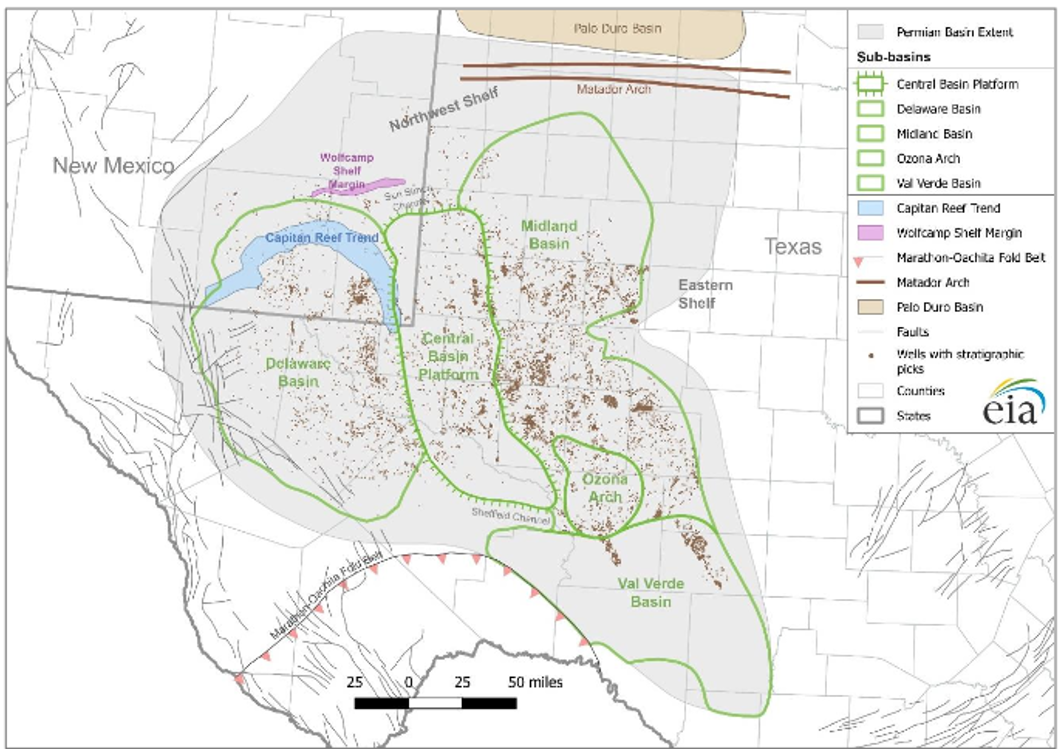
- The Permian Basin is the largest producer of crude oil in the U.S., accounting for about half of U.S. production in 2025 (Fig. 1).
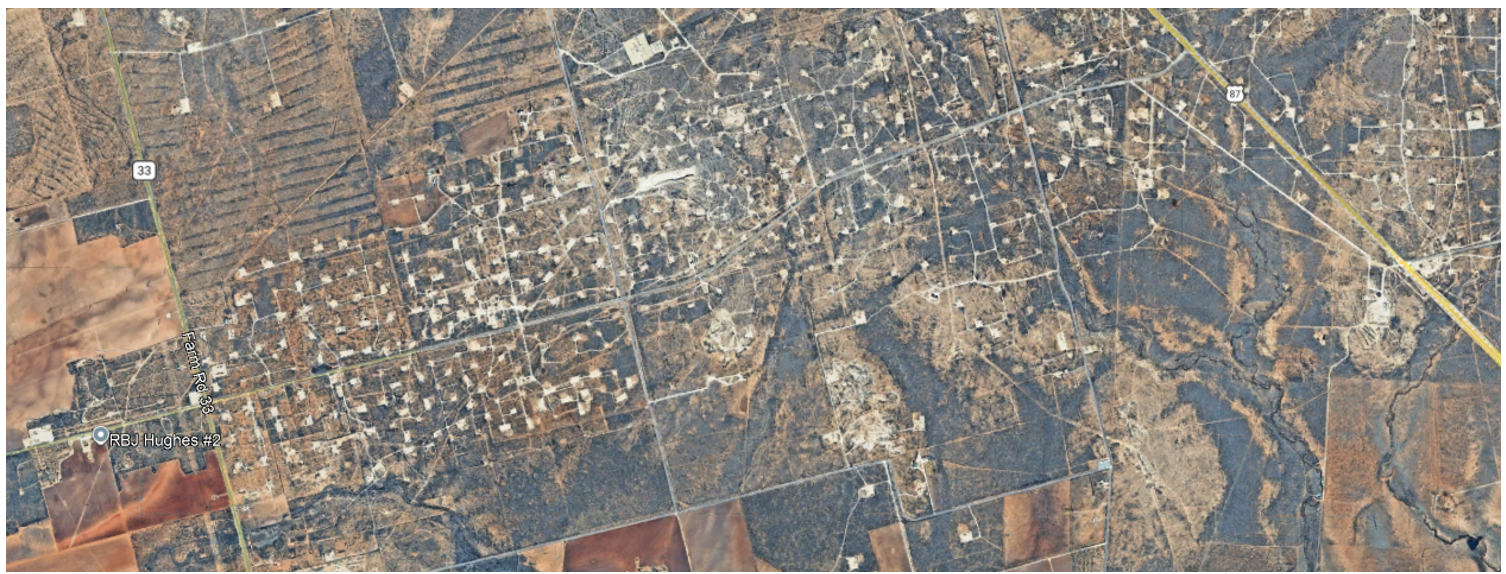
- Most of the produced water is derived from production in unconventional plays in the Midland and Delaware basins within the Permian Basin (Fig. 1). These are the source rocks or shales and require hydraulic fracturing to produce oil and gas. Frac pads are found throughout the Permian Basin (Fig. 2). Because of the low permeability, the produced water cannot be injected back into these reservoirs and has generally been disposed of below or above the oil and gas reservoirs. This injection has been linked to induced seismicity and promoting other management practices, besides subsurface disposal.
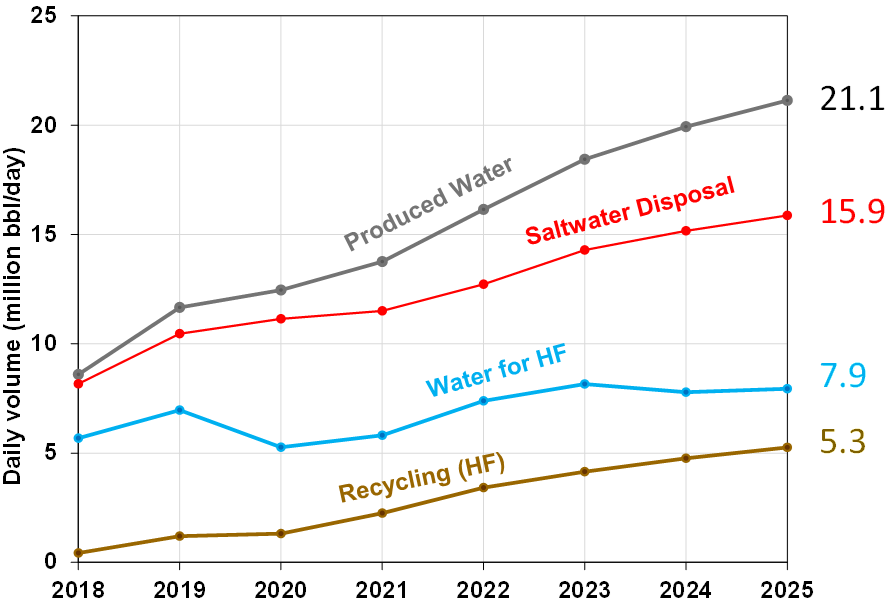
- Water is also produced with the oil and gas, termed “produced water”. The volumes of produced water have markedly increased over the decade in the Permian Basin to ~21 million bbl per day in 2025 (~1 Bgal/day, ~1 million acre feet/yr) (Fig. 3).
- In contrast, produced water from conventional oil and gas reservoirs (high permeability) is generally managed by reinjecting the produced water into the reservoirs to maintain reservoir pressures to promote enhanced oil recovery (EOR).
Fluid Budget in the Permian Basin Relative to Pilot Treatment Plants
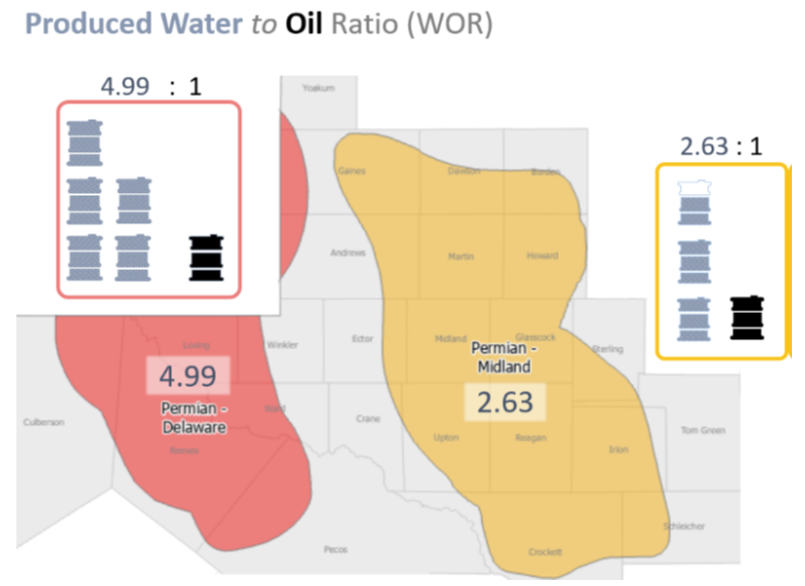
- The Permian Basin produces far more water than oil in many areas, ranging from ~2.6 bbl of water per bbl of oil in the Midland Basin to ~5 bbl of water/bbl of oil in the Delaware Basin (Fig. 4). Water management is a dominant operational challenge.
- During the early stages of unconventional oil and gas development, water sourced for hydraulic fracturing was generally fresh and derived mostly from groundwater.
- Water use for hydraulic fracturing is reported by industry to FracFocus.
- Over the past decade operators realized that they could use produced water with minimal treatment (clean brine) for hydraulic fracturing. Produced water is increasingly being used for hydraulic fracturing.
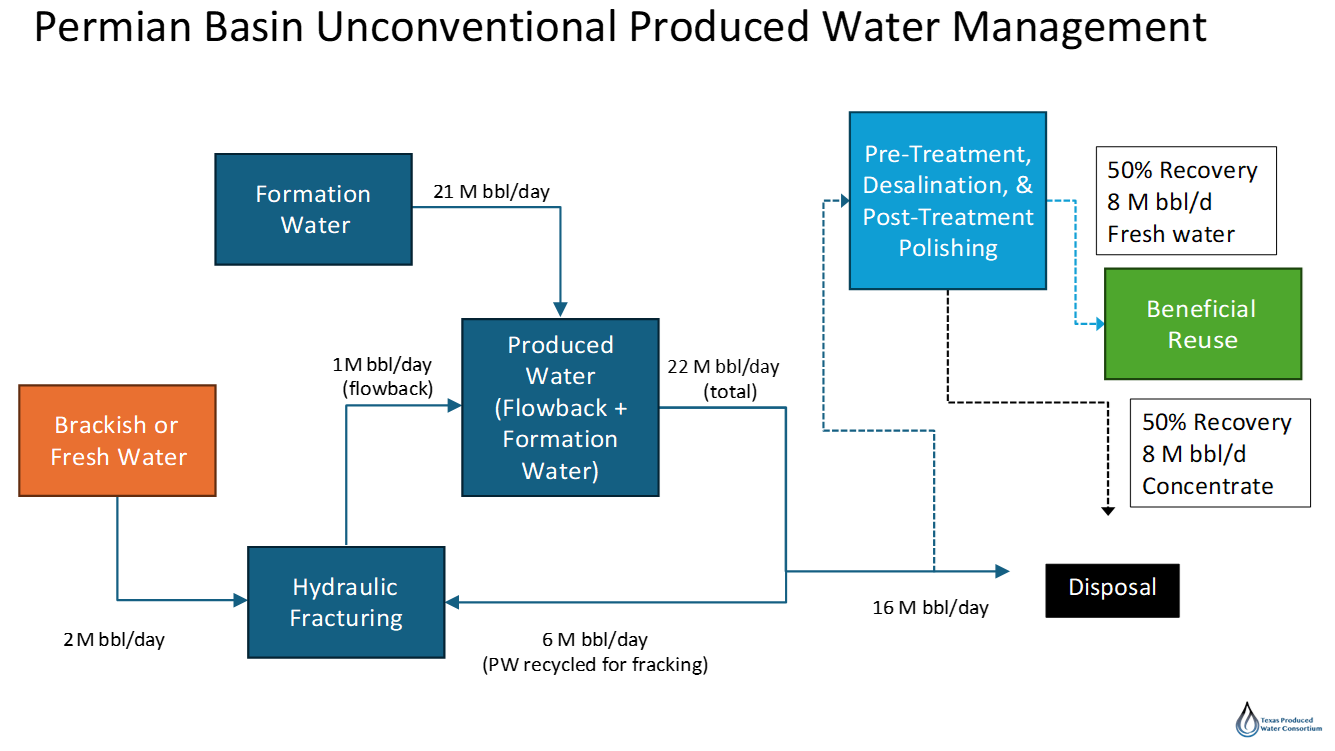
- Recent estimates of recycling suggest that ~70% of water for hydraulic fracturing is sourced from produced water (Fig. 3) but this volume only represents about a quarter of the produced water volume.
- Taking 21 M bbl/d of produced water in 2025 along with ~1 M bbl/d of flow back water from hydraulic fracturing results in a total volume of 22 M bbl/d. Considering ~6 M bbl/d reused for hydraulic fracturing results in a residual volume of 16 M bbl/d for disposal or treatment for beneficial reuse. Assuming 50% recovery from treatment results in ~8 M bbl/d of freshwater and similar volume of concentrate for disposal (Fig. 5).
- A total of five pilot treatment systems were studied in 2024–2025, ranging from 20–800 bbl/d capacity with raw produced water salinity ranging from 105,000 to 163,000 mg/L total dissolved solids (TDS) (TxPWC, 2026).
- The number and capacity of pilot treatment plants has been increasing within the past couple of years, and currently plants are under construction to treat 1,000s to 10s of 1000s of bbl/d.
- Assuming a treatment capacity of 10,000–100,000 bbl/d would result in 1300–130 treatment plants to manage 13 M bbl/d of produced water. Scaling up current efforts from pilot plants to larger scale deployment will be challenging.
Produced Water Treatment Options
- Salinity of produced water varies from ~50,000–90,000 ppm (median) in the southern region of the Delaware Basin to ~110,000–170,000 mg/L in the rest of the Permian Basin (TxPWC, 2024). Produced water aggregation networks of large midstream companies provide fairly uniform produced water through concentration equalization.
- Treatment process framework: Converting produced water into usable water requires three general stages:
- pre-treatment (removing oil/grease and solids),
- desalination (removing salts), and
- post-treatment (polishing to remove trace contaminants like ammonia, metals, and organics).
- Thermal desalination: mimics the natural hydrologic cycle, water is evaporated, leaving salts behind, then condensed to produce very low salinity water (distillate or condensate). It is particularly suited for very high salinity (hypersaline) produced water (e.g., ≥120,000 mg/L TDS). It is not highly sensitive to variability in the salinity of the feedstock. It does not remove volatile compounds, such as ammonia, as well as non-volatile constituents (e.g., only 90% removal instead of 99% removal).
- Reverse osmosis: membrane-based desalination process that uses pressure to force water through a semi-permeable membrane, leaving salts and contaminants behind. Most suitable for low to moderate salinities (seawater, 35,000 ppm, ≤~70,000 ppm TDS). Newer approaches are pushing salinity thresholds, including ultra-high-pressure RO (UHPRO), osmotically assisted RO (OARO), and low salt rejection RO (LSRRO). RO requires extensive pre-treatment to remove suspended solids, oil and grease, and fine filtration to reduce membrane fouling.
- Technology tradeoffs between thermal and membrane desalination include energy efficiency, CAPEX and OPEX, pretreatment requirements, feedwater sensitivity, and post-treatment volatile removal. The cost of energy typically constitutes most of the OPEX of desalination.
- Post-treatment is required to remove ammonia, trace organics, and trace metals before discharge or reuse. Specific permit requirements for surface discharge and land application are being developed by TCEQ.
- Energy is a key constraint and opportunity: Desalination is energy-intensive, especially thermal methods. Natural gas is the near-term solution, but emerging options, like small modular nuclear reactors could provide efficient, low-carbon energy and even waste heat for desalination. The TxPWC is working with Natura Resources on developing SMR using a molten salt reactor (MSR) that is inherently safer than traditional water reactors.
- Freshwater recovery decreases with increasing salinity from ~50% to 30% depending on the salinity of the initial produced water, resulting in 50–70% of concentrate requiring disposal (Fig. 5).
- Economic convergence of disposal and treatment: Disposal costs average ~$0.7 per bbl that could exceed $1/bbl with increased transportation distances. Out of basin conveyance costs would be comparable to disposal costs, with both summing to ~$1.5 per bbl. Treatment costs are decreasing due to technological advances and could be < $2 per bbl in the future. This convergence is making beneficial reuse increasingly economically viable.
- Initially, most water transport was using trucks but this converted to pipelines over time.
- The Texas Produced Water Consortium recently released a Pilot Testing Water Quality Report on the quality of treated produced water based on samples of pre-treated, desalinated (DPW), and post-treatment or polished water (PDPW) for 60 samples from five pilot testing projects.
- Generally, with average PW salinity of ~120,000 mg/L TDS, the thermal and membrane-based desalination pilot tests removed bulk salinity to yield an average desalinated PW of 317 mg/L TDS, which is suitable for most beneficial reuse applications (e.g., streamflow augmentation, rangeland rehabilitation, and crop irrigation). Of the 101 TCEQ drinking water limits, 76 were comparable with the polished desalinated PW quality data, and >98% of these parameters complied with TCEQ drinking water limits.
Beneficial Reuse Pathways
- Permitting authority transferred from the Railroad Commission to TCEQ for surface water discharge and land application, (HB 2771, 2019; SB 1145, 2025) and TCEQ is currently developing limits for surface water discharge permits and land application permits.
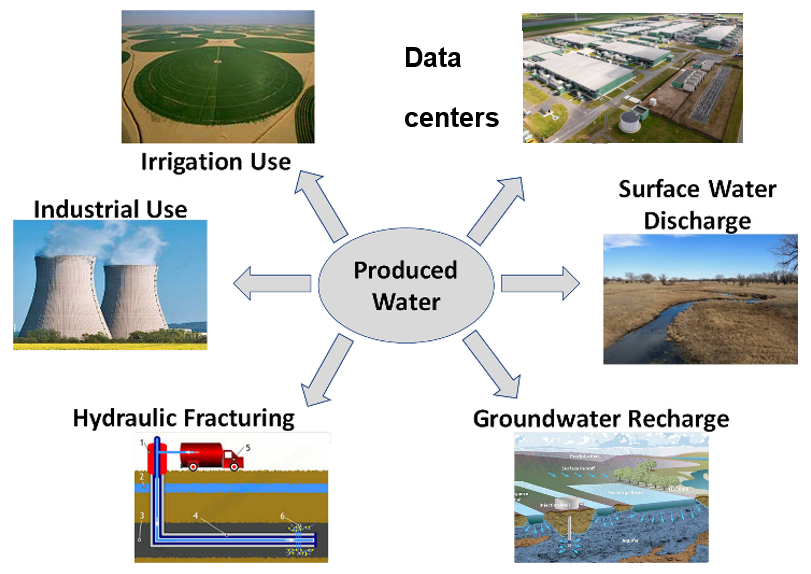
- Potential beneficial reuse pathways: Treated water could be discharged into rivers (e.g., Pecos River), used for rangeland rehabilitation or irrigation, applied in industrial settings (including data centers), expanding regional water supplies (Fig. 6).
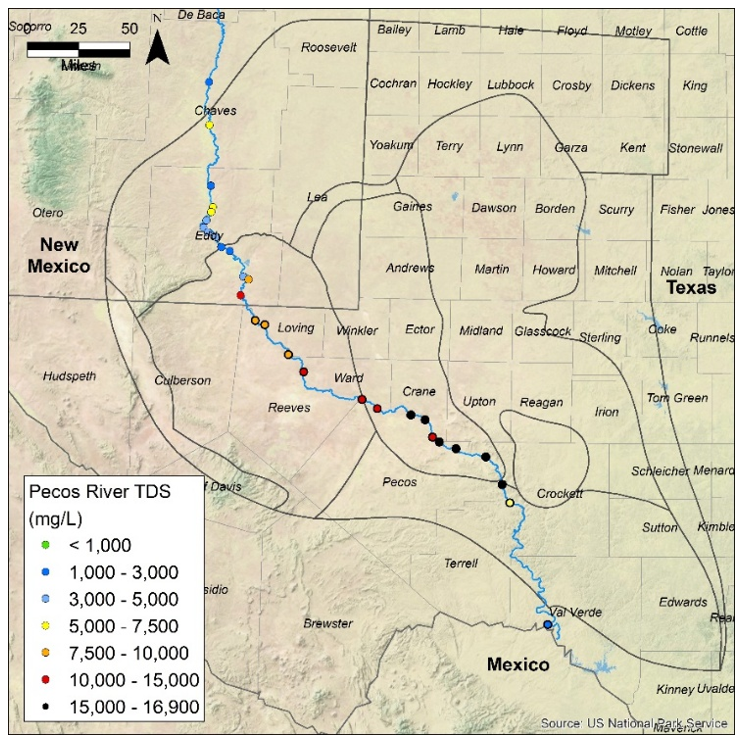
- The Pecos River has salinities up to 17,000 mg/L TDS and discharge of treated produced water could improve the water quality (Fig. 7).
- Ammonia in treated produced water from thermal desalination could be beneficial for irrigation as a fertilizer.
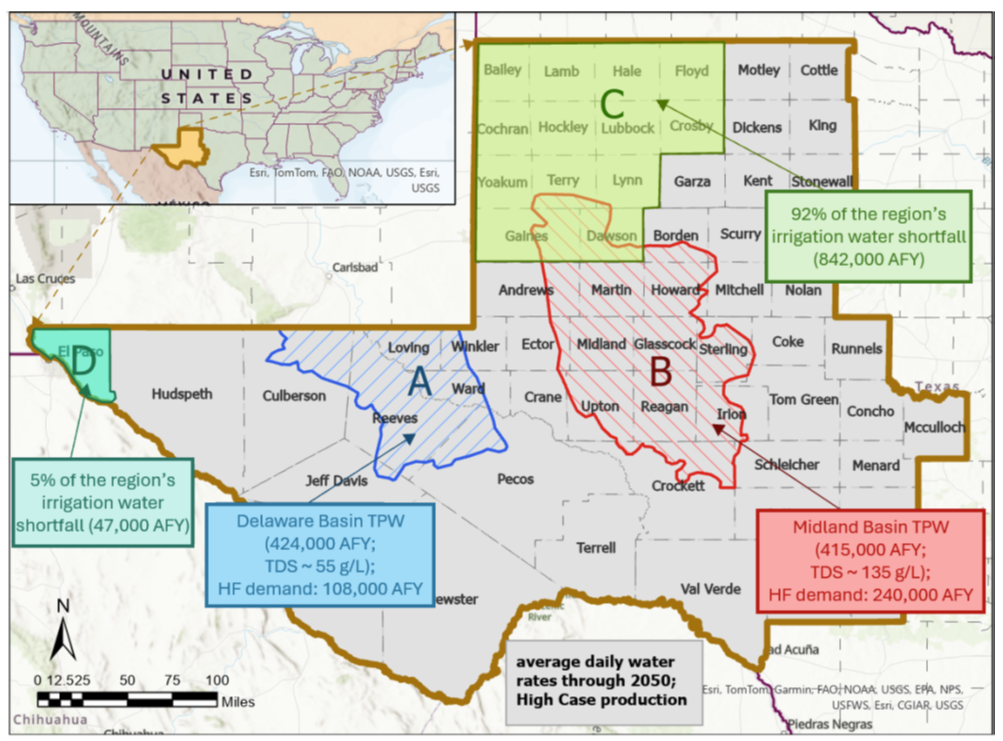
- Most of the irrigation shortfall is north of the Midland Basin (Fig. 8).
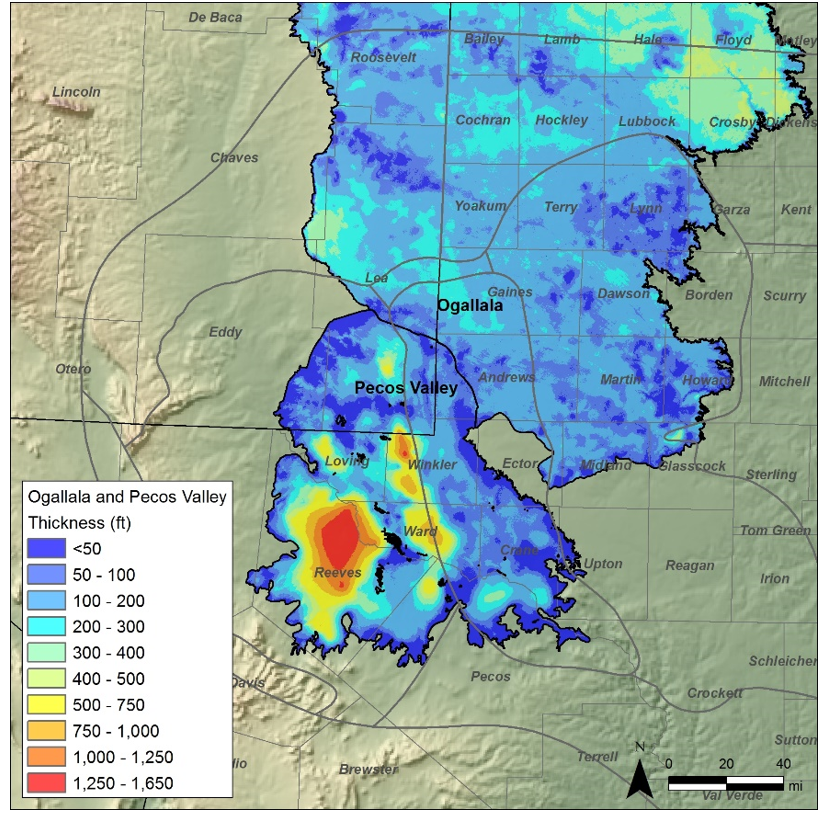
- Depleted aquifers, including the Ogallala and Pecos Valley aquifers, could be replenished with treated produced water, using spreading basins and allowing the treated produced water to equilibrate with the sediments as it percolates to the underlying aquifer (Fig. 9). However, this option is not currently being considered by TCEQ.
- Rise of water midstream infrastructure: A new “midstream” sector has emerged to handle water logistics. Extensive pipeline networks now transport produced water, replacing earlier truck-based systems and enabling large-scale movement and storage.